A historical introduction
| HOME | 1980-2000 | 2001-2010 | 2011-2020 | 2021-present |
After finishing law school at the University of Leiden in 1978, I had the good luck of being immediately hired there as an assistant professor. I was still studying philosophy in Leiden and in the period from 1978 to 1982 I was both a teacher/researcher and a student. During those years I was pondering the question what should be the topic of my PhD-research, because I was quite certain that I wanted to stay in academia with a job that included research.
My publications in this period were not based on a clear research plan. But, looking back, I noticed that the main topic of my first scientific publication De echtelijke woning na echtscheiding (1980) was the relation between the posive divorce law of The Netherlands and the law that would be desirable. I tried to formulate a theory about the circumstances in which the 'real' Dutch law would be the desirable law, rather than the positive law. Not all readers of my article noticed that this was the main topic of the article, and not - as the title suggested - the legal status of the marital home after a divorce. This theme, the relation between the positive law and desirable law, has remained central in my research.
At least the following papers can (amongst others) be seen in the light of this theme:
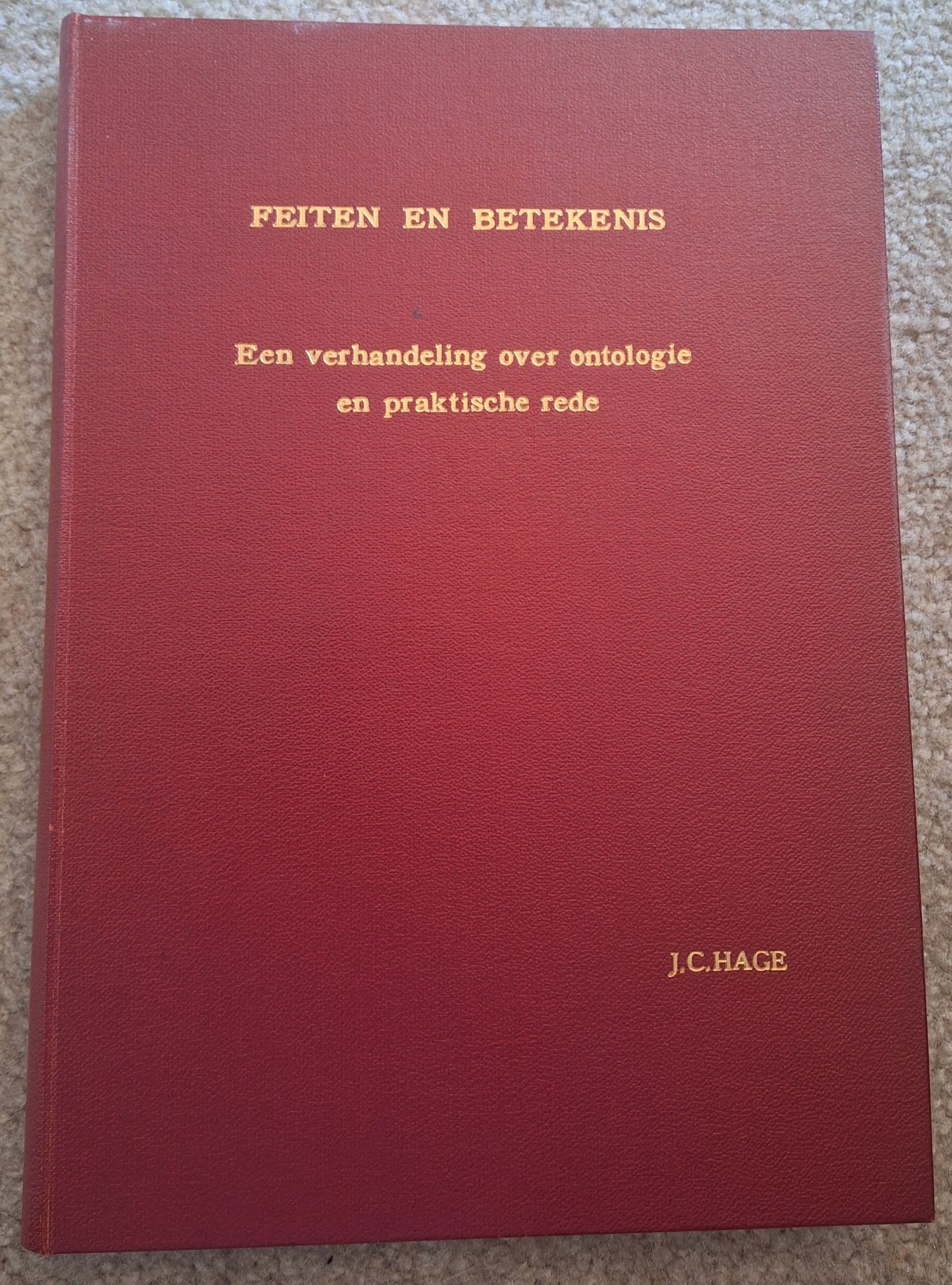
In 1982 I graduated for philosophy, and I started working on my PhD-dissertation. To be frank, I had no idea of what I intended to accomplish with my thesis, apart from that I wanted to do something with the Is/Ought distinction in relation to law.
The central claim of my thesis is that the world, in the sense of all facts and things, is a meaningful entity because the facts and things in the world have meanings. That explains the title 'Feiten en betekenis', or - in English - 'Facts and Meaning'.
A second important claim of my thesis is that the meanings of facts are sometimes aimed at guiding behaviour. To state it somewhat simplistically: normativity primarily lies in facts and therefore there is no gap between Is and Ought. It seems that this claim, if correct, takes away a major problem for the possibility of a true legal science. In the final part of my thesis, I therefore tried to lay down the foundations for such a science of law. To be more precise: I wrote about practical reason, but my conception of practical reason was strongly influenced by legal reasoning. As it turned out later, the attempt to create foundations for a true legal science was doomed to fail, but the attempt did produce the groundwork for my research on legal logic that started after I defended my PhD-thesis.
After defending my PhD-thesis I might have fallen into a black hole, but that did not happen because a new branch of legal science - or was it computer science? - started to develop. In the 1980s, personal computers became widespread and this gave rise to, amongst many other things, the new discipline of Law and Computer Science. I had always been interested in computer science; during my law studies I (superficially) studied several programming languages. When, in 1986, the Leiden Law School created a course on Law and Computer Science and I was invited to join, I immediately grasped the opportunity. And that was to determine the course of my research for the next 15 years or so.
The first few years, until 1991, I spent much of my research time on getting a grip on the developing new discipline. And on the development of a research network in The Netherlands, because other law faculties also started with education and research on Law and Computer Science. Being all beginners in the field, researchers from most of the Dutch Law Schools started to cooperate, and this cooperation ultimately led to the Jurix Foundation which still organizes yearly conferences in the field.
In Leiden my opportunity to grow was limited, and when, in 1989, I was invited to join the Department of Computer Science at Maastricht University for a research project on user interfaces for computer programs for software maintenance, my wife Loes and I decided to leave Leiden and to move to Maastricht. We also decided to live in the town of Lanaken, just across the Belgian border. In this research project (the MACS-project) I cooperated with Maarten van der Meulen. We were unofficially assisted by Maarten's wife Inge.
After two years the research project ended and coincidentally I was invited to join the Maastricht Law School. There I became responsible for the skills course for lawyers - that is what they hired me for - and I also became the leader of a beginning research group on Law and Computer Science.
My 'research team' in Maastricht consisted of Georges Span, who was finishing his PhD-research under the supervision of Hans Crombag. Soon it was to be strengthened by Bart Verheij and Arno Lodder as beginning PhD-researchers. Not much later Ronald Leenes joined the research group; he was employed by the Technical University of Twente and worked on a PhD-thesis under the supervision of Dick Ruiter. The five of us formed a good research team which played a serious role in the developing field of Law and Computer Science, not only in the Netherlands (Jurix), but after a while also internationally through the International Association for AI and Law (IAAL). Notice, by the way, how the name of the latter association reflects the implicit move from computer science in general to artificial intelligence.
My focus on Law and computer science lasted until 2001, but already soon it became research on the logic of legal reasoning, with an eye to applying this logic in automated legal reasoning systems. This emphasis on legal logic can be seen in the topics of my publications from 1991 on.
My PhD-thesis played an important role in this connection. From it, I took the central role of reasons as facts that plead for or against the presence of other facts. This led to a logic of reasons (Reason-Based Logic) which contrasted with first-order predicate logic, which was then still very much in vogue as the stereotype of what real logic was.
Reason-Based Logic is, technically speaking, a non-monotonic logic. A non-monotonic logic is a logic which allows new information to invalidate conclusions that could validly be drawn in the absence of that information. The development of non-monotonic logic was very much a buzz in the 1980s and 1990s because it was obvious that reasoning by intelligent systems (including human beings, I would say) is non-monotonic. Reason-Based Logic was seen as a competitor for other non-monotonic logics, but it never became influential.
I used Reason-Based Logic as a foundation of what I would later call Rule-Logic. Rule-Logic was inspired by the idea that rules are not statements and that the logic of rules is not the same as, and not even similar to, traditional logic with its focus on statements (propositions, if you will). The central idea underlying Rule-Logic is that a distinction must be made between the applicability of a rule to a fact situation (to a case) and the actual application of the rule to that case. Applicability is merely a reason for application, a reason that may have to be weighed against reasons against application. This balancing of reasons for and against application of a rule is where Reason-Based Logic has a place in Rule-Logic
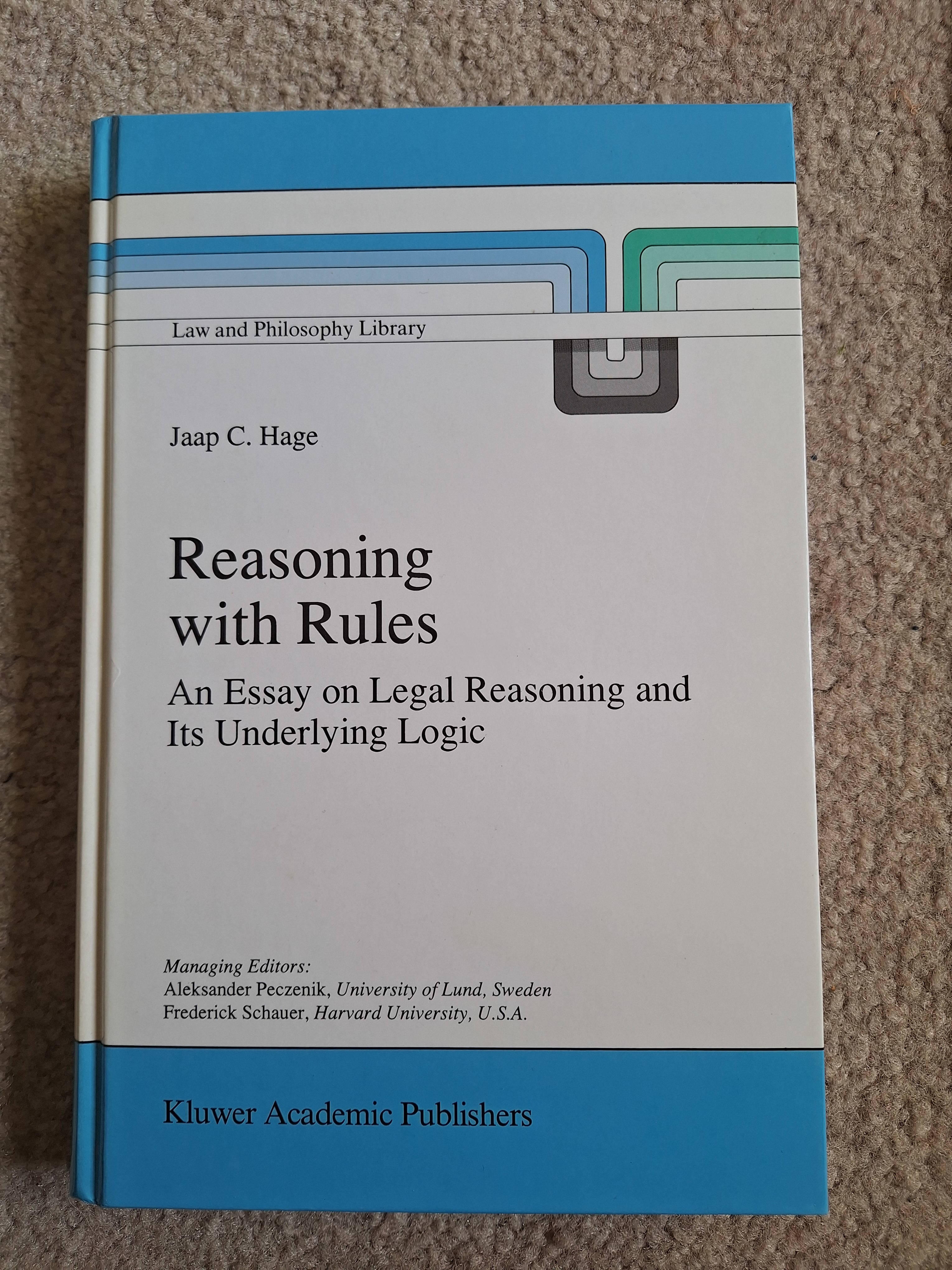
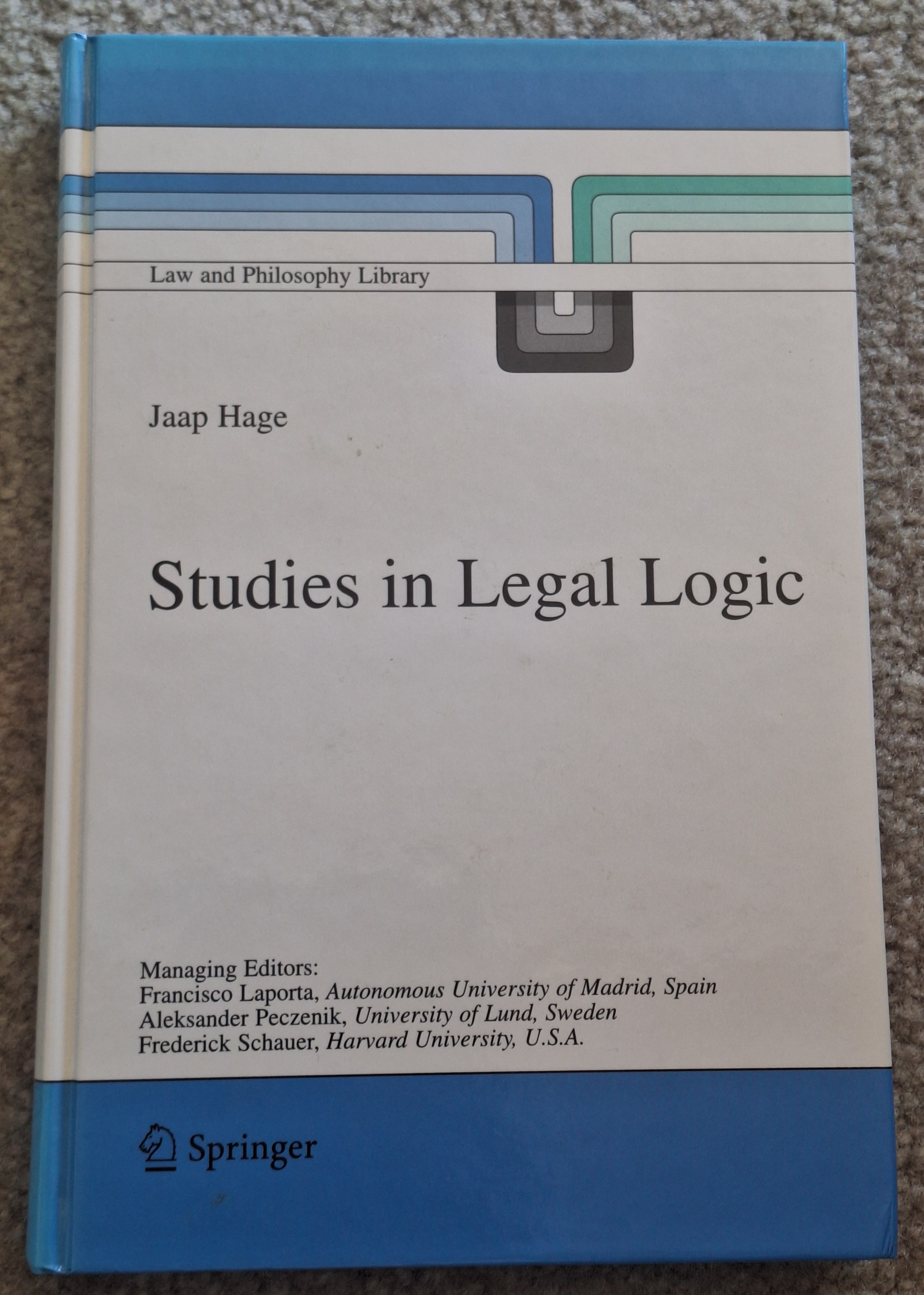
The theory of Reason-based logic and Rule-logic forms the core of my first book on legal logic, Reasoning with rules. This book was published in 1997. After its publication, I still published a number of articles on legal logic, but the emphasis of my research drifted to more general philosophical topics such as epistemology (coherentism) and to the basic concepts of law. The end was reached officially in 2001, when the Maastricht Law School reorganised for monetary reasons and decided that Law and Computer Science would not be financed anymore. For me personally, my second book on legal logic, Studies in Legal Logic of 2005, marked the intellectual end point of my involvement in law and computer science. However, it did not end my interest in the topic and I incidentally still wrote and published a few papers on law and articial intelligence and on legal logic.
The mention of years and concrete events suggests that my research trajectory can neatly be subdivided into definite periods. That suggestion is misleading. My cooperation with Alek(sander) Peczenik proves the point. Peczenik had already for some time defended the view that legal reasoning does not look like deduction and that it was very much a matter of weighing and balancing. When defeasible reasoning became a hot topic in Law and AI, he was very much interested in that new development. He invited Giovanni Sartor and myself for a plenary address when the IVR World Congress was held in Lund in 2003, and Alek and I had already cooperated on a few articles in 2000 and 2001. This cooperation smoothed my transition from Law and Computer Science to Legal Theory when my faculty did not support the former kind of research anymore from 2001 on.
Another factor that made my transition to legal theory much easier was the interest from the Jaegellonian University in Krakow in my research on defeasibility. This interest became manifest when Bartosz Brozek contacted me in connection to his Habilitation on the topic. A few years later my contacts with Krakow were extended to Michal Araszkiewicz (Coherentism) and Wojciech Zaluski (Ethical issues in relation to law).
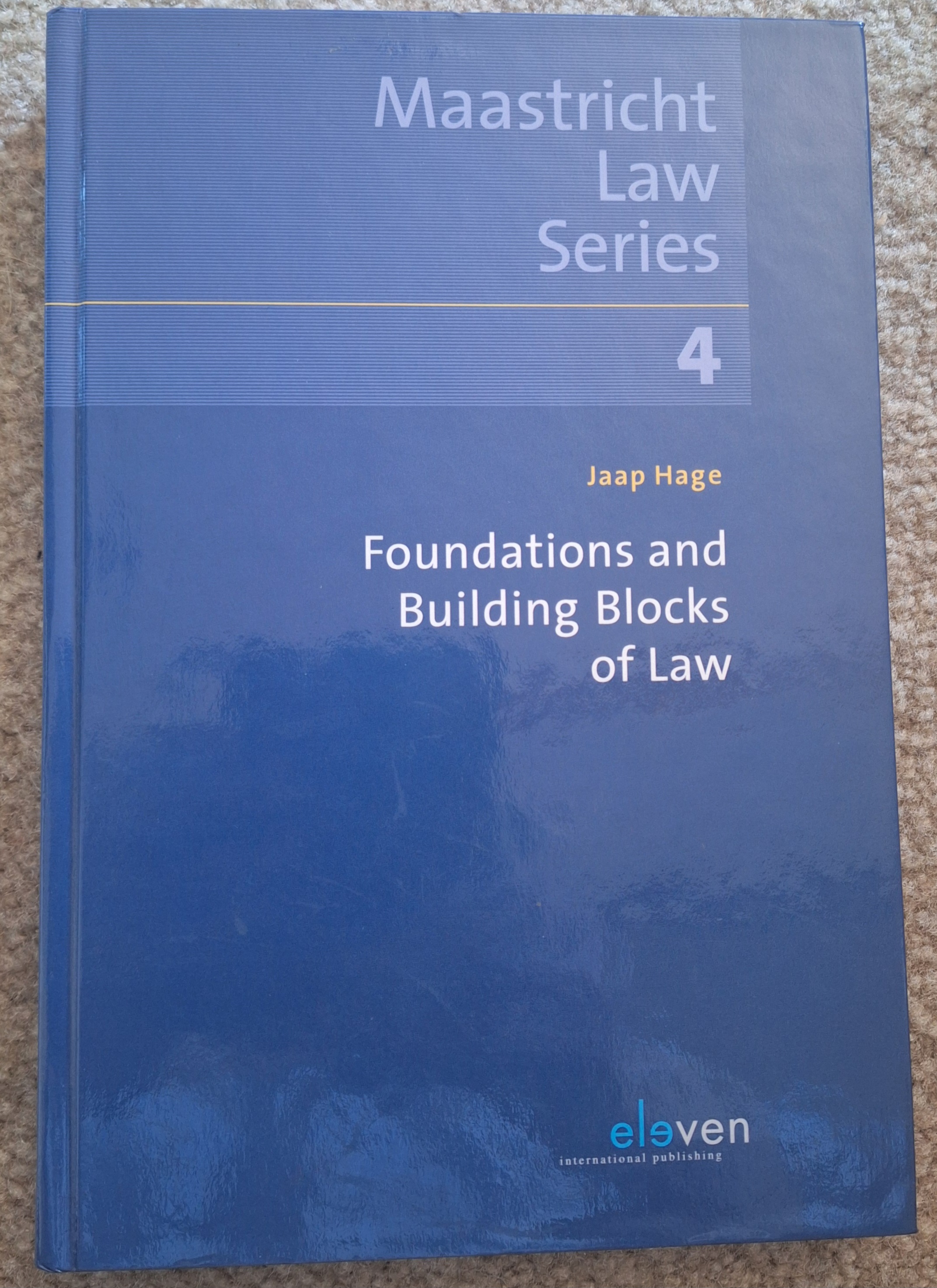
In the period from, say, 2001 to 2018, my research was not focused on one topic in particular, but some themes played an important role: coherentism as a tool for evaluating knowledge, including knowledge of the law, the objectivity of knowledge in general and of legal knowledge in particular, and - first and foremost - the analysis of law's basic concepts such as legal transactions, rights, duties, powers and compterences. This period more or less ended in 2018 with the publication of my book Foundations and Building Blocks of Law. In that book I tried to summarize the main ideas of my doctoral dissertation and the results of my research on basic legal concepts.
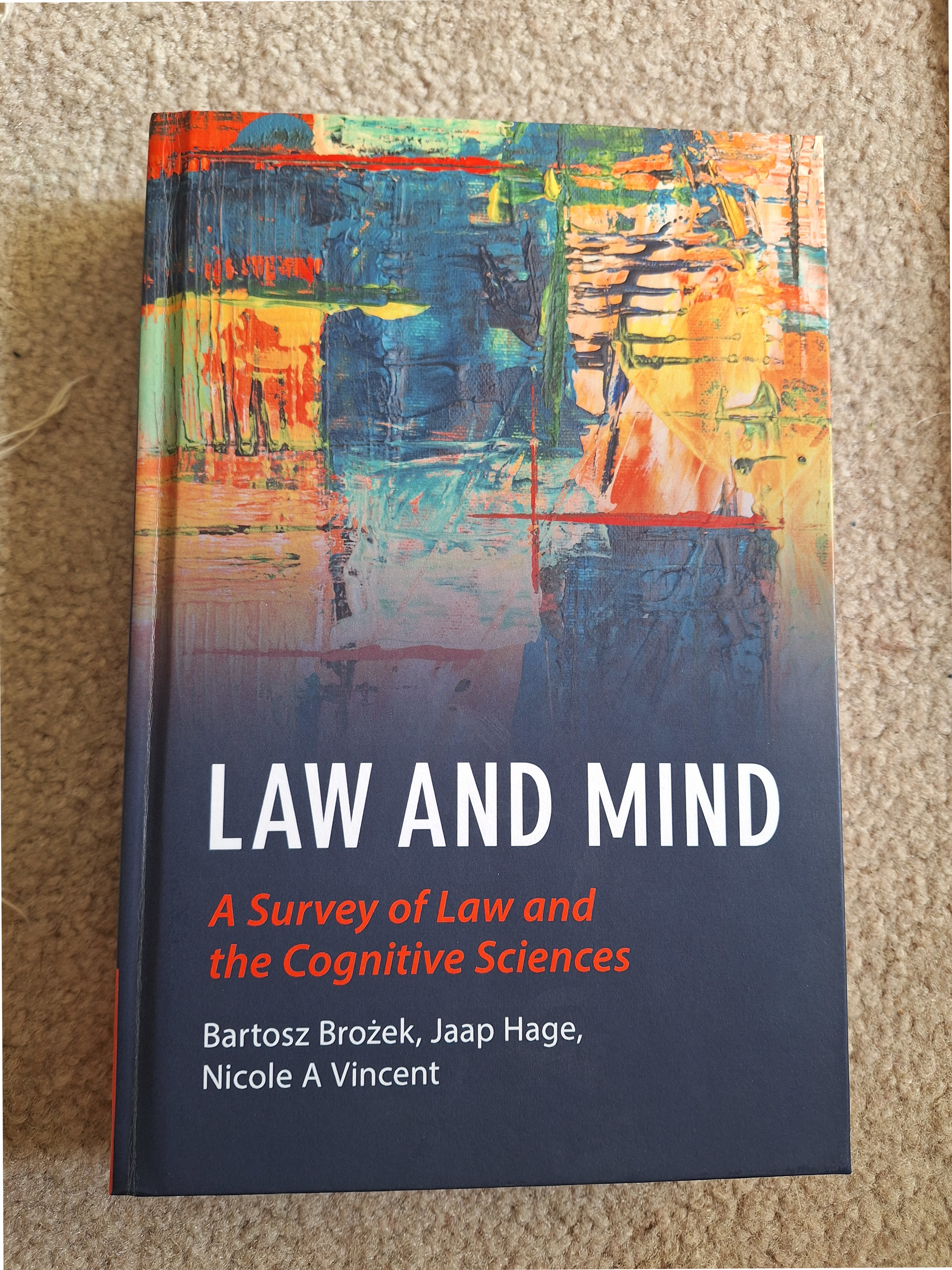
The publication of Foundations and Building Blocks of Law gave me the feeling that my research on legal theory had come to a natural end. In combination with the fact that I was only four years removed from my official retirement this gave me the illusion that I should finish my scientific career with a hobby of mine for which I never had found time: the relevance of the cognitive sciences for law. An inivtation of Bartosz Brozek to join him and - as turned out later - Nicole Vincent in editing a book on the topic gave me a new research goal.
The book Law and Mind appeared in 2021 with Cambridge University Press and it strongly influenced my research that was to follow. In one chapter that I wrote, I briefly mentioned the idea that social reality has two kinds of facts, which I now call conventional and constructivist (or reason-based) facts, and that constructivist facts play an important role in some debates in legal theory. In another chapter, that I co-authored with my former PhD-student Antonia Waltermann, we explored the relation between the (non-) existence of a free will and legal reasonsibility. And a third chapter, authored by Corrado Roversi, inspired me to use insights from the cognitive science to develop a theory of how social reality exists.
The time that I spent on Law and the Cognitive Sciences was only brief, but it was very influential in leading me to a new research topic: Law and Social Reality.
My first publication on law and social reality used the notion of constructivist facts to explain why ought-facts seem so different from 'ordinary' facts but are nevertheless facts like other ones. (A theme that was already central in my doctoral thesis.) Quite soon several other papers were published that aimed to demonstrate the usefulness of the notion of a constructivist fact to deal with traditional issues in legal theory. At present, one other paper in this research line is still in preparation, and there is a vague plan to turn the papers and my earlier work on coherentism into a book on the place of law in social reality. Whether that book will ever be written is still an open question.
The account of how my research developed on the course of time may have created the misunderstanding that I did everything on my own. The contrary is true. Several of 'my' PhD-supervisees cooperated closely with me on our research projects and the results were theirs as well as mine. I already mentioned Bart Verheij, Arno Lodder, and Ronald Leenes, but Hester van der Kaaij, Antonia Waltermann and Henrique Marcos also deserve special mention. Their contributions on the theory of juridical acts, on the analysis of sovereignty, and on the logic of international law have had a big influence on my own research, both during and after the period of supervision.
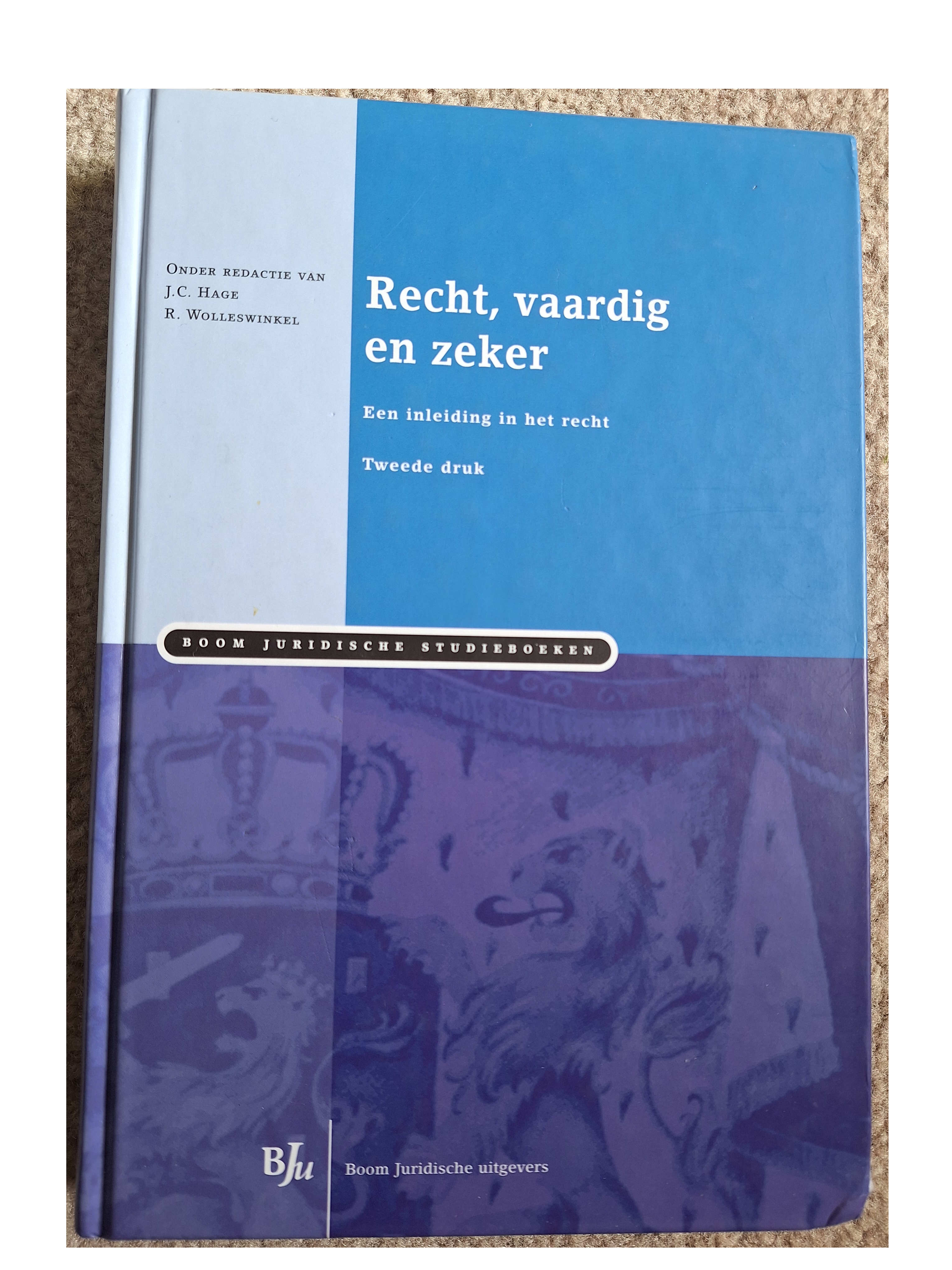
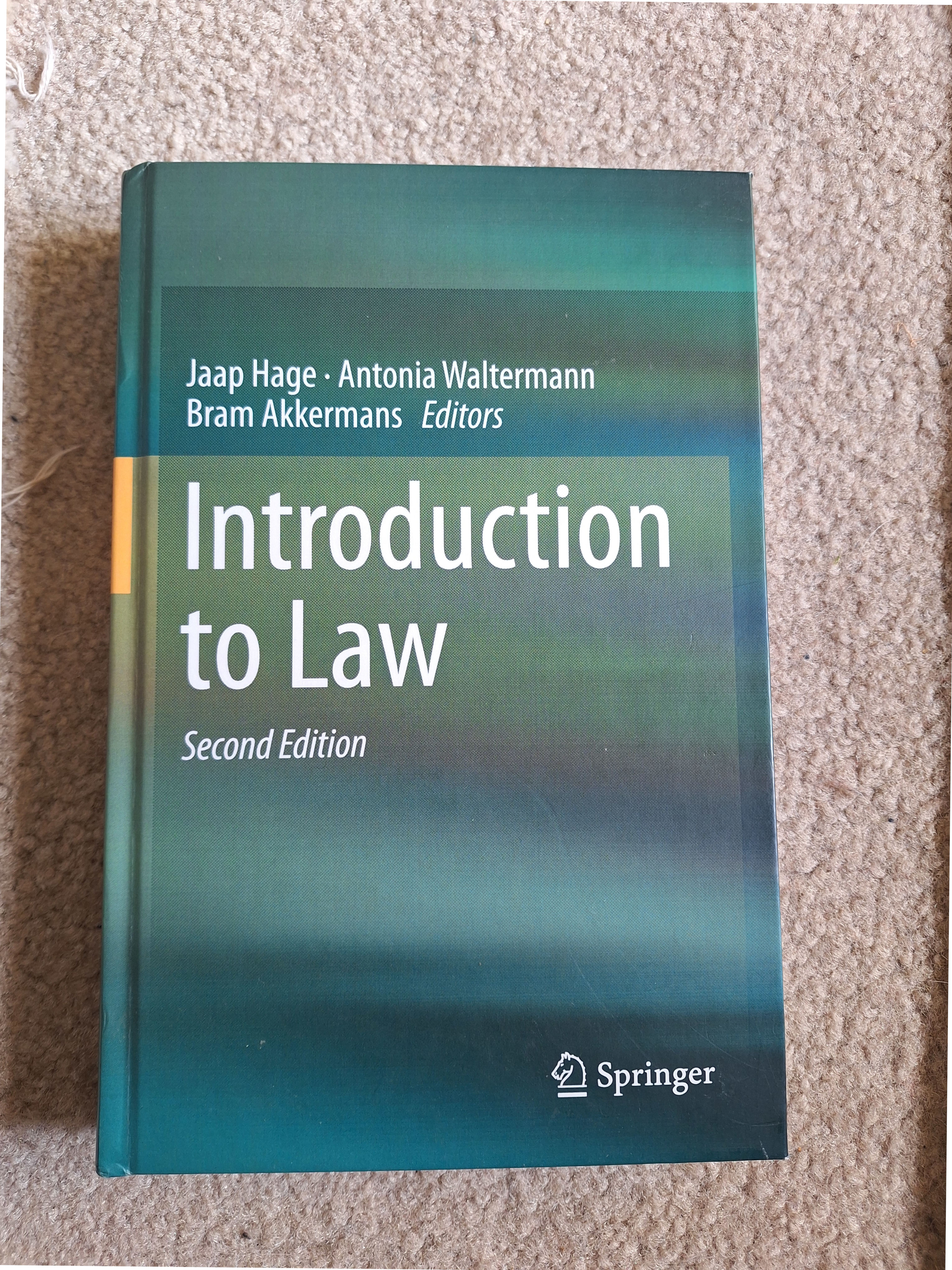
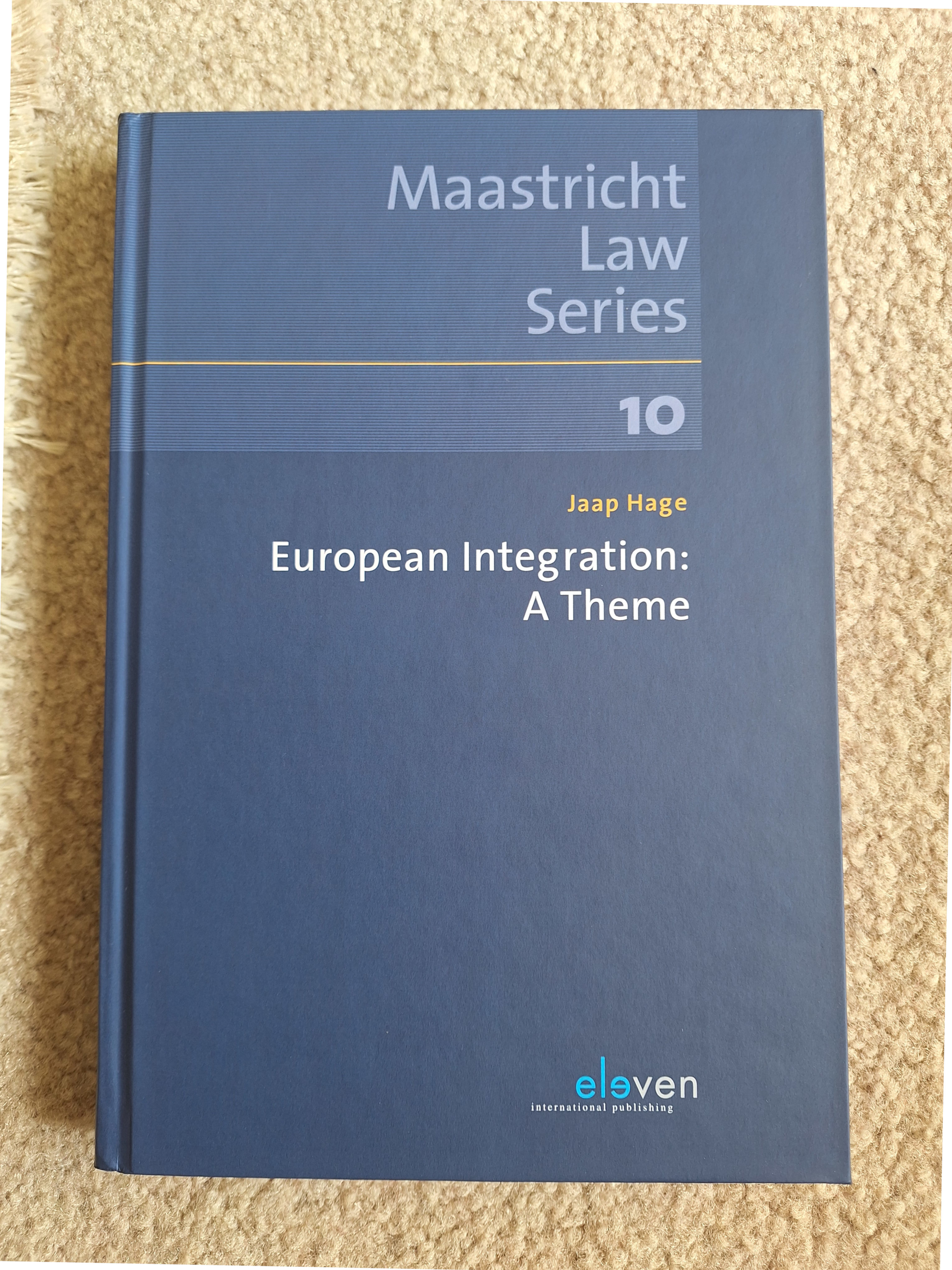
A large part of the work of a scientific university staff member consists of teaching and preparing teaching materials. Especially the production of teaching materials borders so closely on research that the boundary is hard to draw. That justifies - at least in my eyes - the mention of some teaching materials as the products of scientific research. In this connection I think in particular of the introductory books Recht, vaardig en zeker and Introduction to Law, which I co-edited and to which I contributed a few chapters, and the book European Integration. A theme, which I authored. The latter book I found interesting to write, because it uses European integration as a means to introduce beginning lawyers to economics, social science and cognitive psychology, topics which they normally would hardly encounter, but which are highly relevant to lawyers.
| HOME | 1980-2000 | 2001-2010 | 2011-2020 | 2021-present |